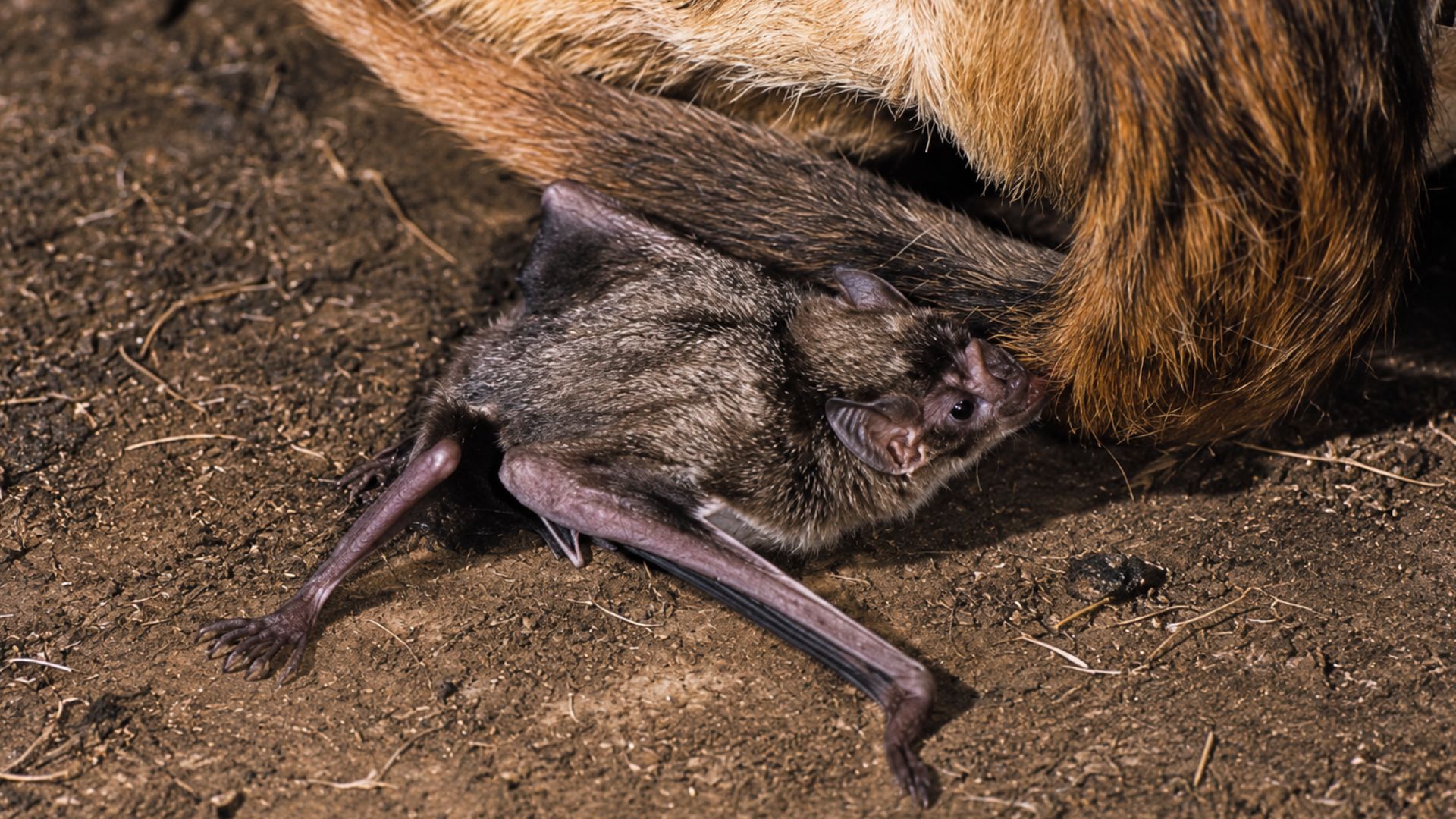
#11: Vampire Bats – Infrared Heat
Finding a warm-blooded animal in complete darkness is only the first challenge for a vampire bat. Once it lands near a potential host, it must locate an area where warm blood flows close enough to the skin to make feeding practical. Vampire bats possess specialized heat-sensitive structures around the nose that help them detect infrared radiation associated with warm surfaces. Research has identified molecular adaptations involving temperature-sensitive receptors that contribute to this unusual ability. The system works over relatively short distances, making it especially useful after the bat has already approached an animal using other senses such as hearing and smell. By detecting subtle temperature differences, the bat can identify promising locations where blood vessels lie near the surface. It then makes a small incision with specialized teeth and laps the blood rather than sucking it through its mouth like a straw. Anticoagulant compounds in its saliva help keep blood flowing during the meal.