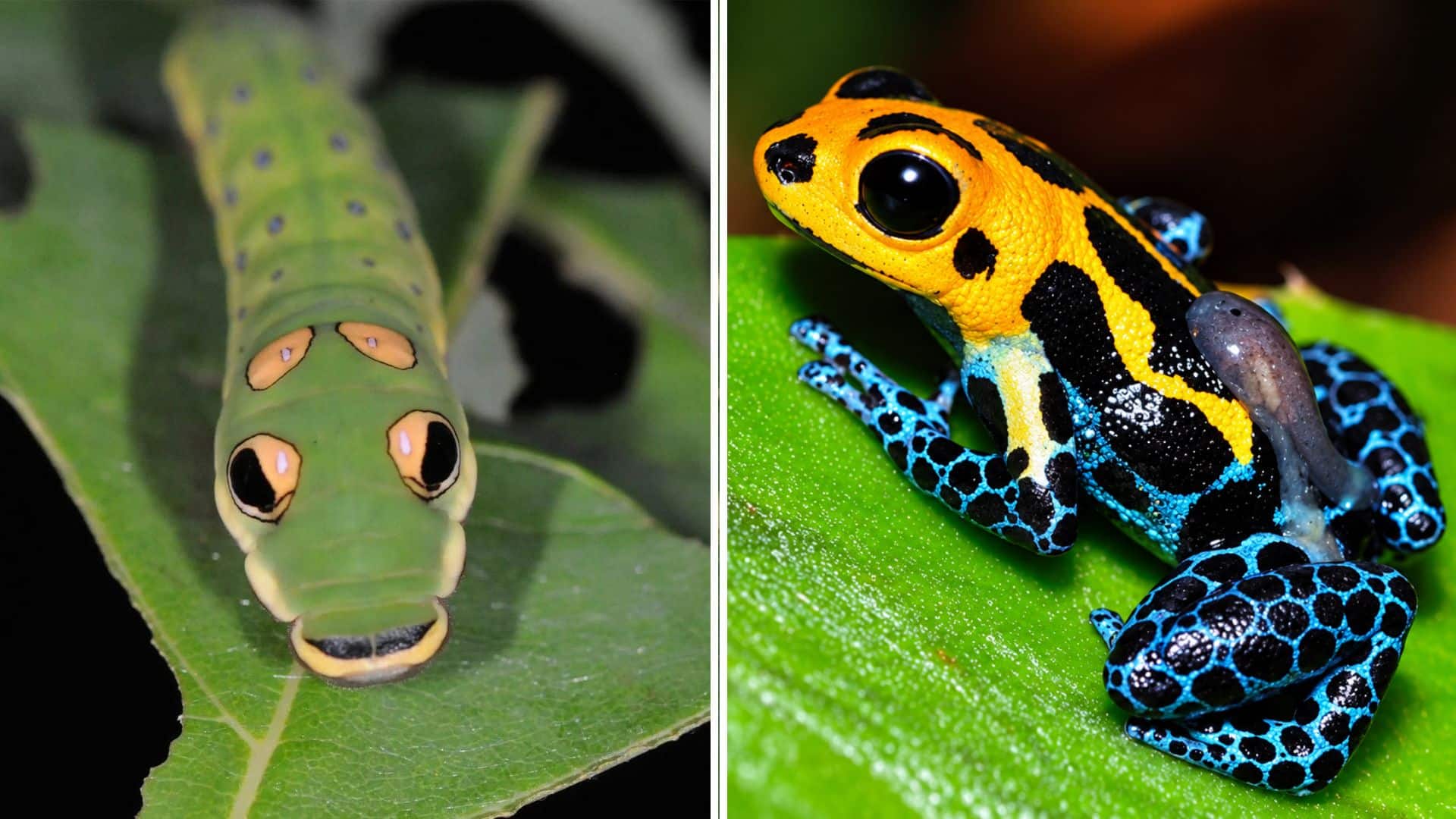
Here is a useful rule for surviving in the wild: looking dangerous can be considerably cheaper than actually being dangerous. Venom takes biological resources to produce. Stingers require specialized anatomy. Chemical defenses can be expensive. But borrowing the colors, sounds, movements, or silhouette of an animal predators already know to avoid? Sometimes that is enough to make an attacker reconsider dinner. Biologists call the classic version of this strategy Batesian mimicry, although several animals below use related forms of defensive deception rather than textbook mimicry. None of them needs to understand the trick for it to work; natural selection simply favors individuals whose bluff buys them another second of hesitation. So ignore what your eyes and ears tell you at first. Take a closer look at these biological impersonators and try to decide which threats are real before the predator has to make the same choice.
#1: Scarlet Kingsnakes – Mimicking Venomous Coral Snakes
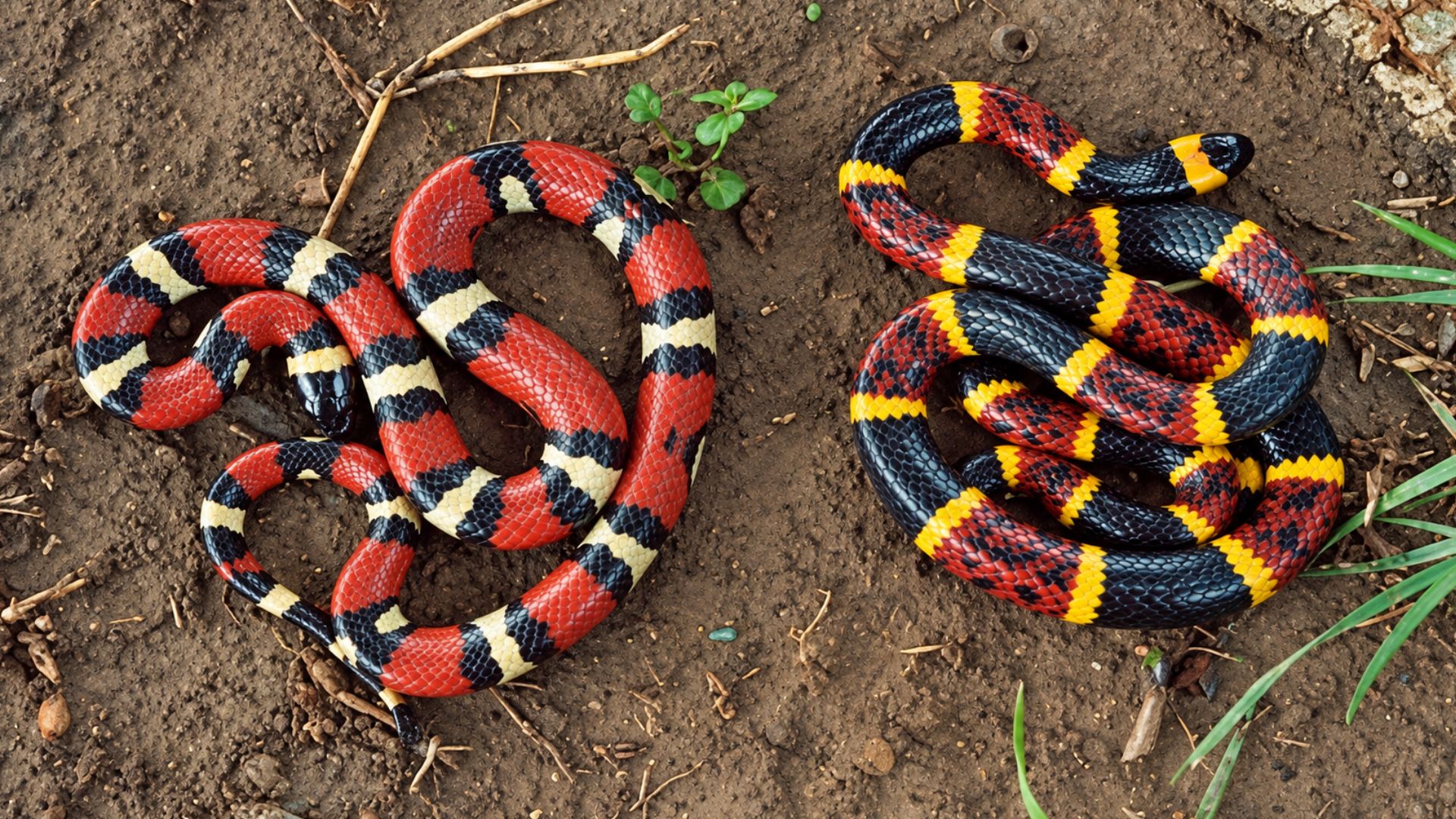
A scarlet kingsnake carries one of the more effective-looking bluffs in North American forests. This nonvenomous snake displays conspicuous bands of red, black, and yellow or whitish coloration that can resemble the warning pattern of venomous coral snakes found across parts of the same range. The resemblance is a classic example used when explaining Batesian mimicry, in which a relatively harmless species gains protection by looking similar to a dangerous or unpleasant one. Predators that have learned—or evolved tendencies—to avoid coral-snake-like patterns may hesitate before attacking a kingsnake as well. The match is not perfect, and color-band arrangements vary geographically, so old rhymes about identifying venomous snakes should not be treated as reliable safety rules. Research has also suggested that the effectiveness of the mimicry is influenced by whether coral snakes occur in the same region, because a warning pattern is more useful where predators have reason to fear the original. The kingsnake itself does not possess the potent venom that makes coral snakes dangerous to their prey. It carries the advertisement without carrying the product.