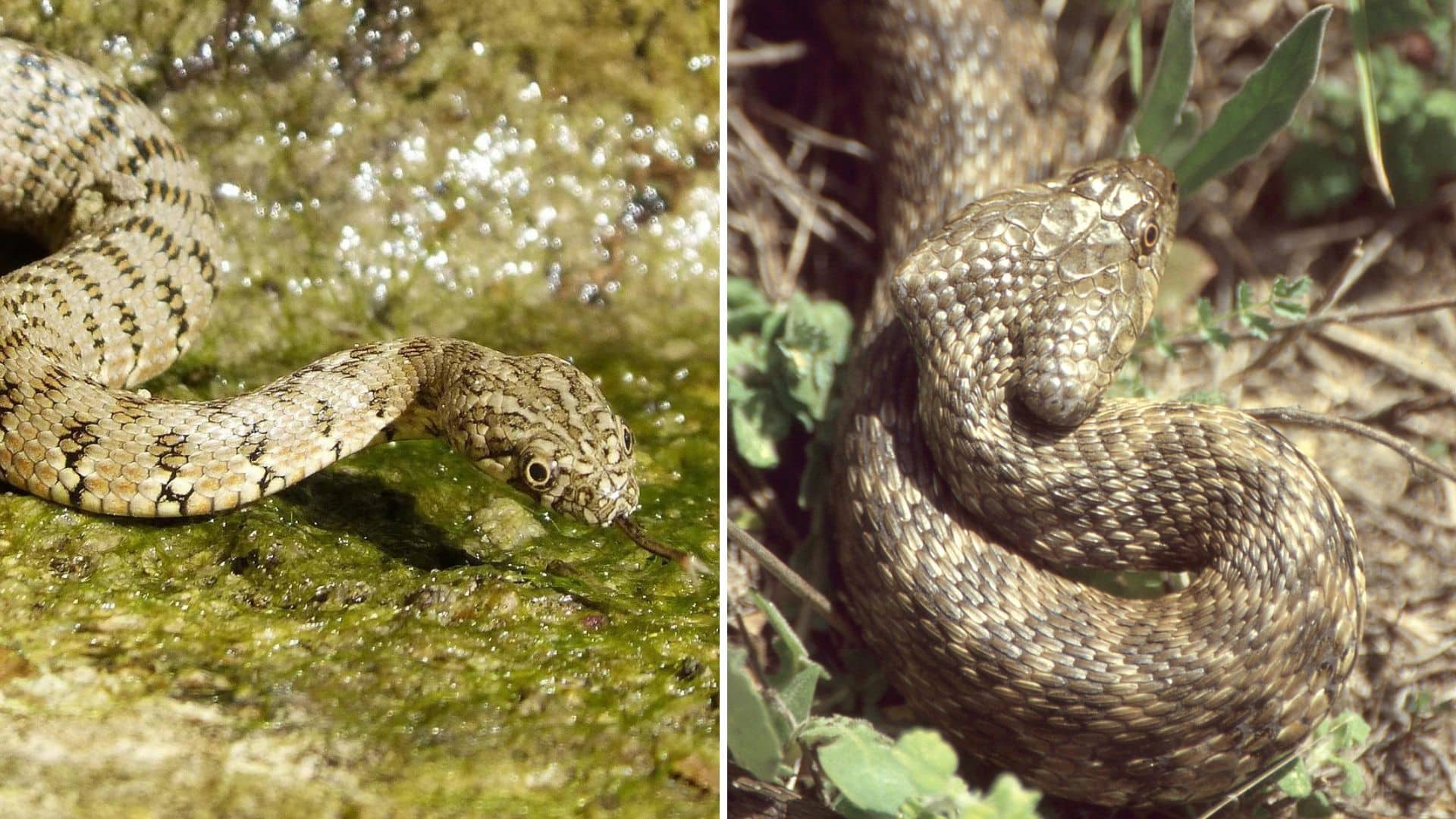
#20: Nonvenomous Snakes That Flatten Their Heads – Mimicking Venomous Vipers
A harmless snake can change its apparent identity in seconds simply by altering the shape of its head. Several nonvenomous species flatten or widen the head and neck when threatened, creating a more triangular profile commonly associated with vipers and other venomous snakes. European grass snakes and North American hognose snakes are among animals capable of dramatic defensive displays involving flattening, although the exact behavior and evolutionary explanation vary by species. Hognose snakes may additionally hiss, strike with a closed mouth, spread the neck, and eventually switch strategies entirely by playing dead. Head flattening can make an otherwise slender snake appear larger and more intimidating, and it may exploit predators’ caution toward genuinely dangerous snakes. Scientists are careful about treating every triangular-head display as proven mimicry because head shape alone is not a reliable indicator of venom, and flattening can also make an animal simply look larger. Even so, experiments with some snakes support the idea that altered head shape can affect how predators perceive them. The strategy requires no venom production and no permanently enlarged skull.