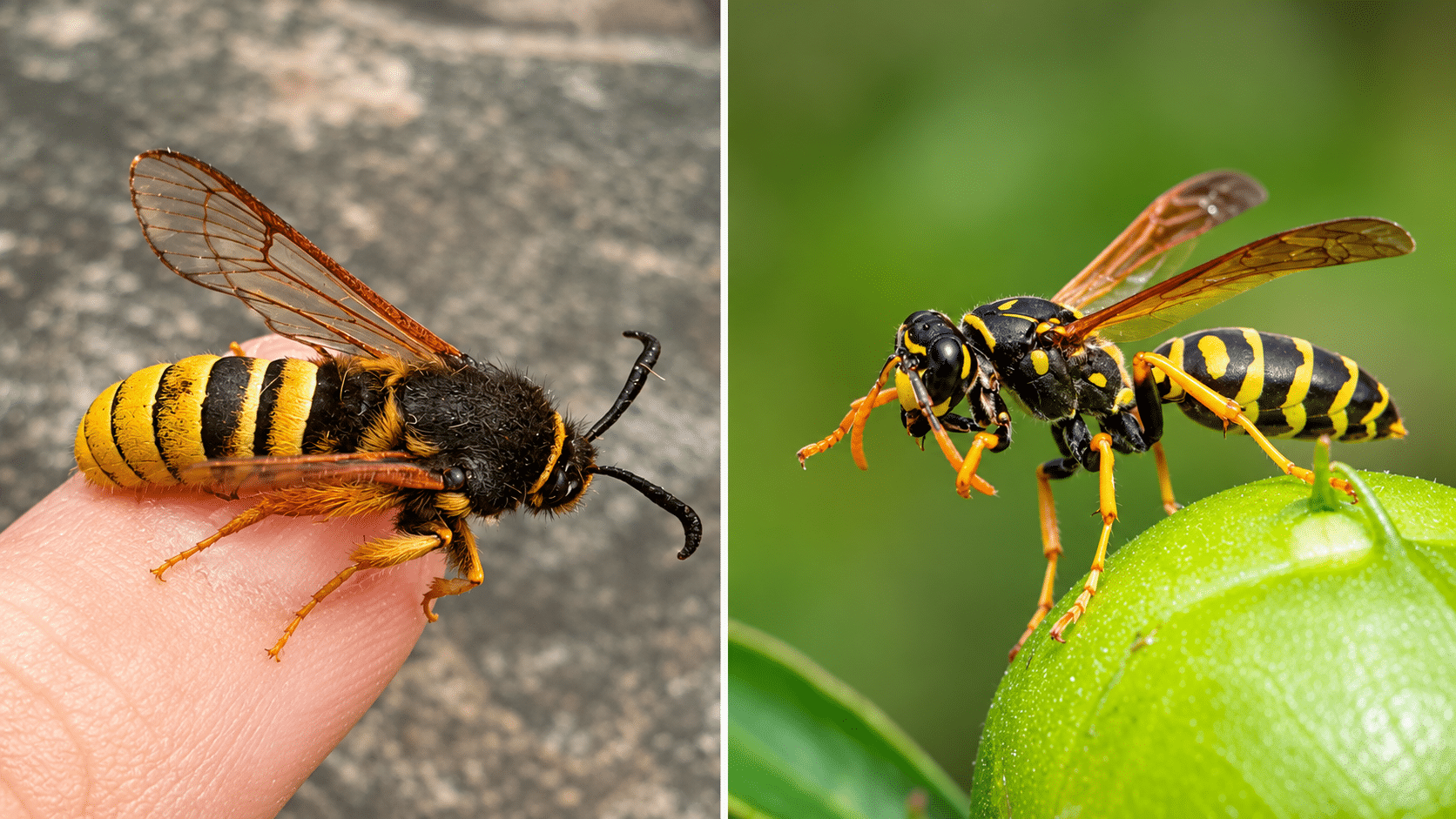
#6: Clearwing Moths – Mimicking Wasps
Moths are usually associated with broad, scale-covered wings, but clearwing moths have transformed that familiar silhouette into something much more intimidating. Many species in the family Sesiidae possess largely transparent wings, narrow bodies, and yellow, red, or orange markings that make them resemble wasps or hornets. The effect can be so convincing that people encountering one in daylight may hesitate before realizing they are looking at a moth. Unlike the wasps they imitate, clearwing moths lack a defensive sting. Their protection comes from making predators behave as though one might be present. The resemblance extends beyond coloration because some species fly during the day and move with a quick, wasp-like style rather than behaving like stereotypical nocturnal moths. Natural selection can therefore shape several components of the disguise simultaneously: wings, body proportions, coloration, and behavior. Birds that have learned unpleasant lessons from genuine wasps may avoid insects carrying the same visual signals. The moth gets the benefit without paying the anatomical cost of producing venom and a stinger.