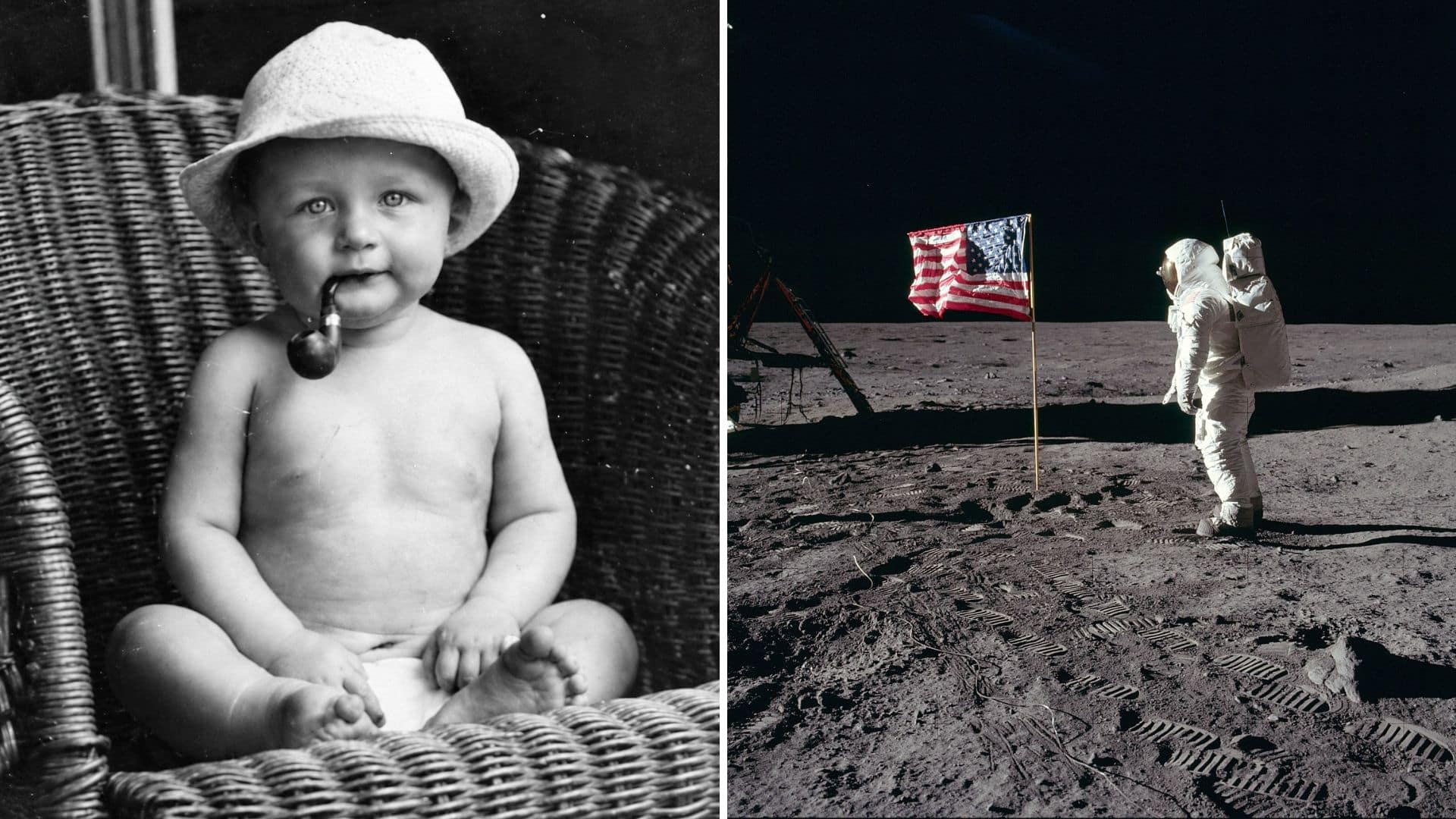
History often feels neatly divided into separate chapters. Silent movies belong to one era, the Second World War to another, and space exploration and modern entertainment to entirely different worlds. Yet some remarkable people lived long enough, or maintained careers long enough, to experience these transformations firsthand. Imagine an actor who was born before airplanes existed and lived to watch astronauts walk on the Moon. Or a singer who served in World War II and later recorded music with one of the biggest pop stars of the 21st century. These aren’t fictional scenarios. They are extraordinary examples of how a single lifetime can connect periods that seem separated by centuries. Some of these individuals witnessed technological revolutions, while others actively participated in cultural and political changes that reshaped the modern world. Their experiences offer an unusual perspective on just how quickly history can unfold. Travel across generations through the lives of these familiar figures and discover the surprising connections between historical moments that rarely appear together. Their stories might change the way you think about the passage of time.
#1: Charlie Chaplin – Born Before the First Airplane Flight and Lived to See the Moon Landing (1889–1977)
Charlie Chaplin was born in London in 1889, fourteen years before the Wright brothers achieved their first powered flight at Kitty Hawk, North Carolina. At the time of his birth, automobiles were still experimental machines, motion pictures had not yet become a commercial entertainment industry, and international travel depended heavily on ships and railroads. Chaplin entered show business through British music halls before becoming one of silent cinema’s recognizable stars during the 1910s. His Little Tramp character entertained audiences around the world at a time when movies relied primarily on visual storytelling rather than spoken dialogue. He subsequently witnessed the introduction of synchronized sound, the rise of television, and the transformation of Hollywood into a global entertainment industry. Chaplin also lived through two world wars and the early decades of the Cold War, incorporating social and political themes into films such as Modern Times (1936) and The Great Dictator (1940). By July 1969, when Apollo 11 astronauts walked on the Moon, he was eighty years old. The technological distance between his childhood and that historic achievement was extraordinary.