
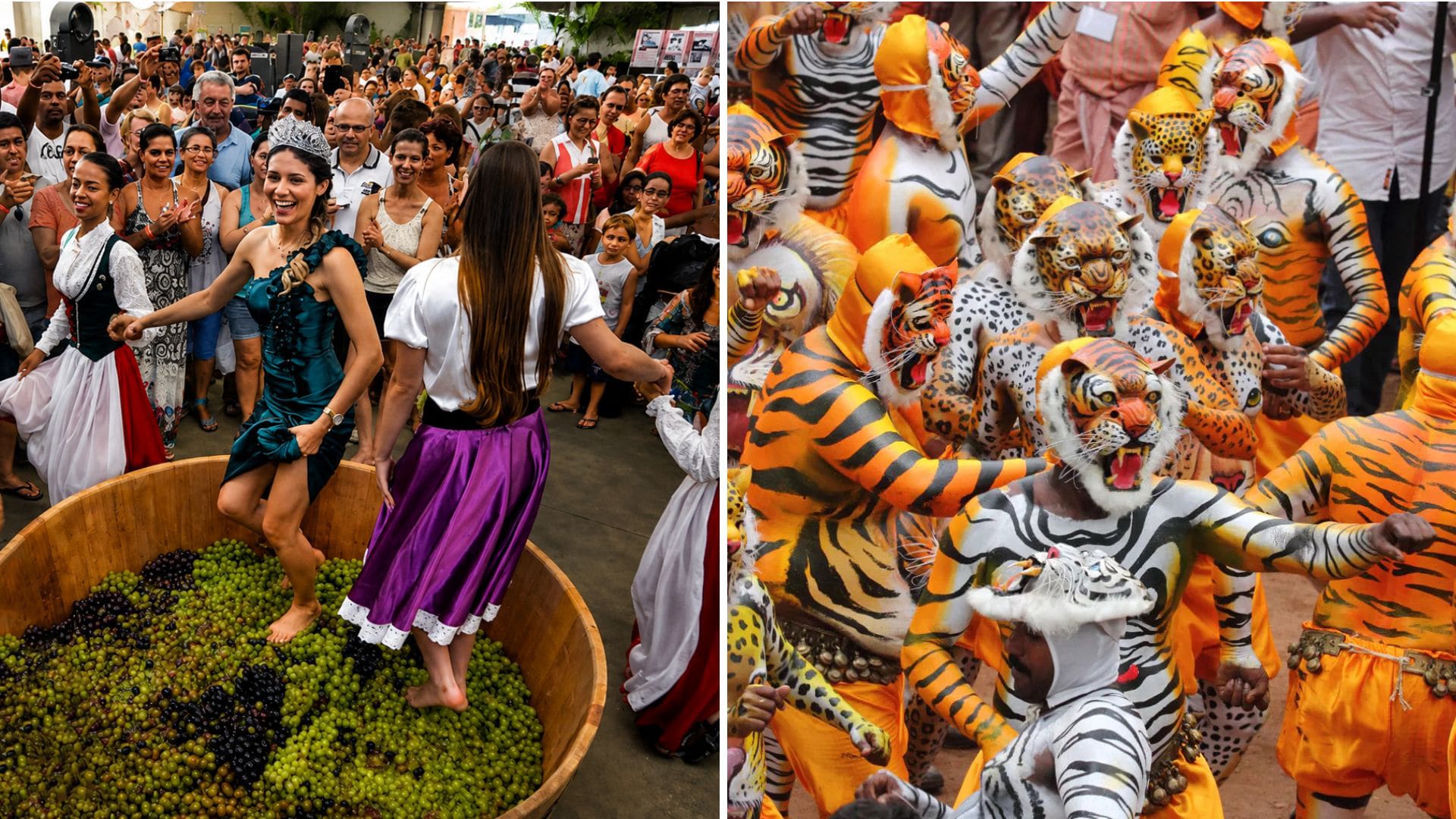
Harvest season can mean far more than gathering crops from the fields. Across the world, communities have transformed agricultural cycles into celebrations filled with elaborate rituals, enormous feasts, music, dancing, religious ceremonies, competitions, parades, and traditions preserved across generations.
Some festivals thank deities or ancestors for abundance, while others celebrate a particular crop that helped shape an entire region’s economy and identity. Grapes, rice, yams, pumpkins, cherries, and even truffles can become the centerpiece of events that attract visitors from far beyond the communities where they began. Behind the colorful spectacle, these gatherings reveal how closely food remains connected to history, spirituality, family, and the land itself.
Keep reading to discover how communities around the globe turn the arrival of the harvest into traditions unlike anything found at an ordinary seasonal celebration.
#1: New Yam Festival — Nigeria
Across several communities in Nigeria, particularly among the Igbo people, the New Yam Festival marks far more than the arrival of another agricultural crop. Yam has historically carried enormous economic, social, and symbolic importance, making the first harvest worthy of ceremonies that connect farming with community identity. Traditionally, old yams are consumed or discarded before the celebration so that the new crop can symbolically begin another agricultural cycle. Depending on the community, prayers and offerings may be made in gratitude to deities and ancestors before newly harvested yams are eaten publicly. The festival can include masquerades, traditional dances, drumming, elaborate clothing, wrestling competitions, and communal meals prepared in numerous ways. Chiefs and other community leaders may occupy prominent ceremonial roles, reinforcing the connection between agricultural prosperity and social life. Celebrations vary considerably across regions rather than following one standardized national format.